I met Brigadier John McGinnis for the first time in the 1960s when I was the Curator at Black Creek Pioneer Village. “The Brig” or “The Brigadier” was Managing Director of the Toronto Historical Board and also served as a member of the Metropolitan Toronto and Region Conservation Authority’s Historical Advisory Committee. He was often at the Village and was a close friend of Russell Cooper, the managing director.
My main task at Black Creek was to bring the buildings to life with costumed staff trained in the tasks and skills everyone would have needed to survive in 19th century Upper Canada. The Brig was interested in our rising attendance and suggested some exchange events in 1967, Canada’s Centennial Year, with soldiers from Fort York coming to the Village to demonstrate military activities and interpreters from the Village going to the fort for special weekends.
Visiting the fort to prepare was a disappointment, particularly the Officers’ Quarters. It was a dreary building, with no activities, a lot of bedrooms, a kitchen in the basement, and a stuffed cat! We soon got an exchange program going and I noticed that the fort had an archaeological dig in progress on the north side of the Officers’ Quarters. It would turn up some exciting results. I decided that our crafts, skills, and historic food demonstrations should take place out-of-doors, some in a canvas house that had been commissioned by the Historical Board in imitation of the tents of our first Lieutenant-Governor John Graves Simcoe and his wife Elizabeth. On these exchanges at the fort I met Curator George Waters and staff members Chris Matthews and Paul Myra, always available and helpful.
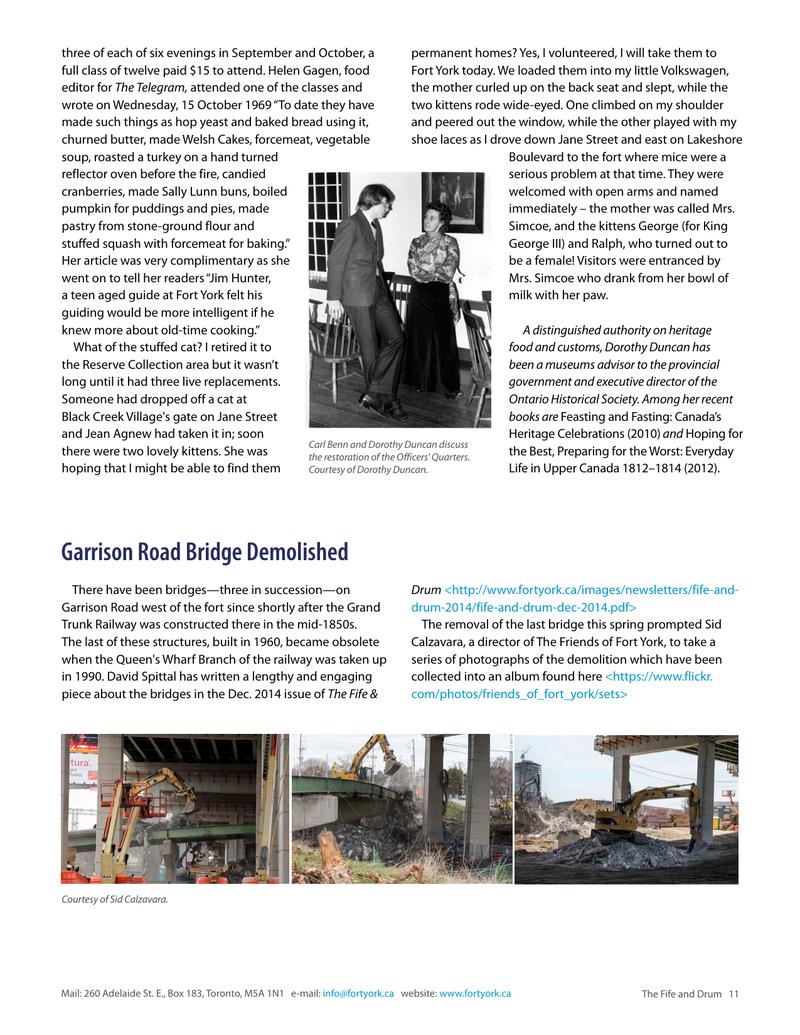
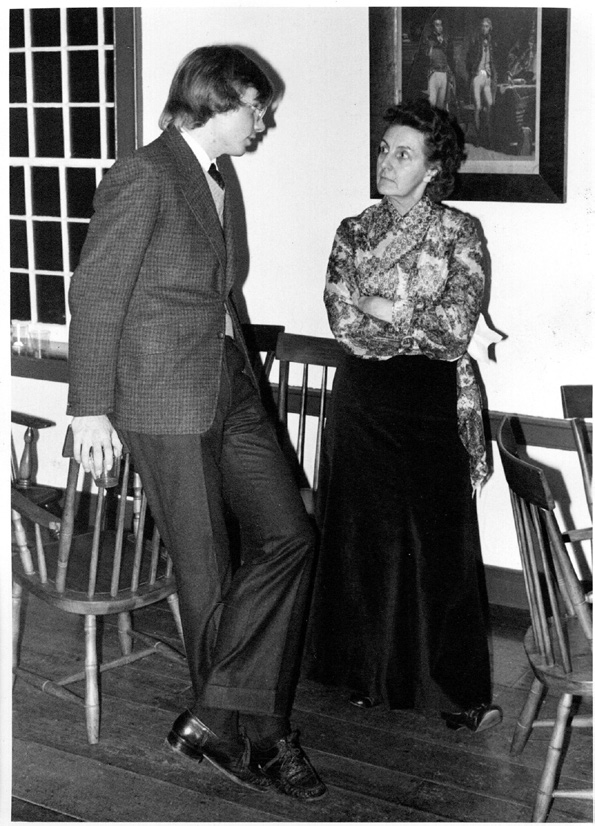
The Brigadier was very satisfied with the exchange program and when the archaeological dig unearthed evidence that the present commanding officer’s bedroom was originally a main floor kitchen, he decided that a Curator for Historical Interiors was needed. I applied for the position, was the successful applicant, and moved to the Toronto Historical Board late in 1968. My challenge was to purchase appropriate furniture and furnishings for the Officers’ Quarters and to get the newly-found kitchen up and running. In co-operation with George Waters I was also to hire and train female staff; review and improve the interiors of Mackenzie House and Colborne Lodge; and interview, hire, and train women to work at these other Toronto museums as well.
It was several months before the advertisement for female staff for Fort York appeared and two excellent candidates emerged: Ruth Keene and Jean Lomas were hired, outfitted with 19th century costumes, and began training.
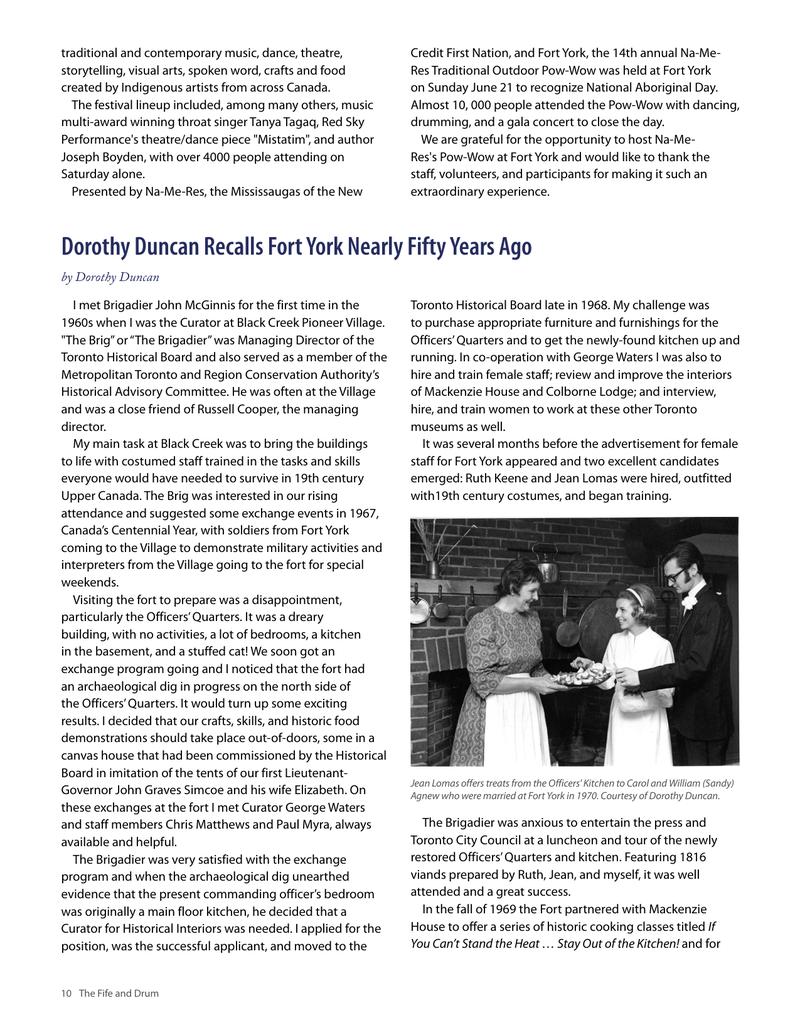
The Brigadier was anxious to entertain the press and Toronto City Council at a luncheon and tour of the newly restored Officers’ Quarters and kitchen. Featuring 1816 viands prepared by Ruth, Jean, and myself, it was well attended and a great success.
In the fall of 1969 the Fort partnered with Mackenzie House to offer a series of historic cooking classes titled If You Can’t Stand the Heat … Stay Out of the Kitchen! and for three of each of six evenings in September and October, a full class of twelve paid $15 to attend. Helen Gagen, food editor for The Telegram, attended one of the classes and wrote on Wednesday, 15 October 1969 “To date they have made such things as hop yeast and baked bread using it, churned butter, made Welsh Cakes, forcemeat, vegetable soup, roasted a turkey on a hand turned reflector oven before the fire, candied cranberries, made Sally Lunn buns, boiled pumpkin for puddings and pies, made pastry from stone-ground flour and stuffed squash with forcemeat for baking.” Her article was very complimentary as she went on to tell her readers “Jim Hunter, a teen aged guide at Fort York felt his guiding would be more intelligent if he knew more about old-time cooking.”

What of the stuffed cat? I retired it to the Reserve Collection area but it wasn’t long until it had three live replacements. Someone had dropped off a cat at Black Creek Village’s gate on Jane Street and Jean Agnew had taken it in; soon there were two lovely kittens. She was hoping that I might be able to find them permanent homes? Yes, I volunteered, I will take them to Fort York today. We loaded them into my little Volkswagen, the mother curled up on the back seat and slept, while the two kittens rode wide-eyed. One climbed on my shoulder and peered out the window, while the other played with my shoe laces as I drove down Jane Street and east on Lakeshore Boulevard to the fort where mice were a serious problem at that time. They were welcomed with open arms and named immediately – the mother was called Mrs. Simcoe, and the kittens George (for King George III) and Ralph, who turned out to be a female! Visitors were entranced by Mrs. Simcoe who drank from her bowl of milk with her paw.
Original printed pages