↗ View this article in the original PDF newsletter
Toronto History Museums have undertaken a range of work in collections management in response to recommendations made in Audrey Rochette’s essay.
“This is obviously a real priority for collections,” says Neil Brochu, Interim Chief Curator, “and something we’re taking really seriously.” Some issues, such as artifact storage, are fairly straightforward and concrete steps have already been taken; others, such as the distinction between animate and inanimate ancestral objects, will need deeper study. And some, especially in cataloguing structure and terminology, will take a lot of work to resolve.
Toronto History Museums cannot, for example, set up a permanent consultative body on its own. “We will be seeking permission from City Council,” says Brochu, “to establish a protocol for community consultation, and establish consultative bodies.”
old cataloguing will be improved upon … and Indigenous histories and names will be included
They would advise on specific artifacts as well as long-term management. This is part of the Indigenous Collections Management Strategy, whose development has begun.
Meanwhile, ceremonial and sacred ancestral objects have been separated from the rest of the collection. So far, not all animate objects have been segregated, but only those identified in the initial study as particularly significant. Brochu says that “we intend to seek further advice on what additional objects should be separated as well as any other considerations for stewardship and care.”
It may be that a dedicated room will need to be set aside for the storage, viewing and spiritual care of specific ancestral objects. Sources of the necessary medicines – sage, cedar, sweetgrass and tobacco – have been secured and advice will be sought on what others might be needed to support appropriate ceremony for the First Nations involved. The collection does not seem to include any artifacts (such as a Haudenosaunee false-face mask) that can only be viewed by a select few.
The only human remains apparently left in the City’s collection is a human scalp, on display at Fort York until 1987, and a high priority for repatriation – if it can be determined to whom. Its cultural origin is uncertain (although whether it is Indigenous or otherwise, given DNA technology, should not be – except that destructive testing would be contentious) and it’s not even clear how it came into the collection. That there are answers to these questions is not a sure thing. “If this information can be found,” says Brochu, “it will go a long way to define a pathway to engagement and repatriation.”
Among the challenges facing the Chief Curator in the collection is its proper documentation, including its completeness, structure and content (and these are perennial concerns of collections managers in any case). Most artifacts in storage, of course, have not received the same research and interpretive treatment as those on display, where an item’s historical context and function are normally included in the text.
Older descriptions are more likely to only describe what an object is – an arrowhead, a pot, a comb – and, ideally, its provenance, without including the significance placed on the object by its originator. Indeed, there are currently no fields in the database for animate/inanimate or sacred/restricted, but adding this information is relatively easy to do. That aside, many of the original descriptions were written by non-specialists (e.g. a registrar, not a curator) and some, based on handwritten file cards, are more than 60 years old.
But the problem is recognized: “old cataloguing will be improved upon,” says Brochu, “and Indigenous histories and names will be included.” It is not clear how much of the collection is of Indigenous origin. Initial research indicates it is a small percentage of the 150,000 artifacts, more than a million archaeological specimens, and nearly 3,000 artworks held by the Toronto History Museums.
Rochette warns, after Amy Lonetree, that museums must now be prepared to speak “the hard truths of colonialism.” In the absence of a related call to action, it’s not clear how this applies to Toronto History Museums – what hard truths relevant to Toronto’s history are still being overlooked. (Given the F&D‘s military context, our special hard truth being overlooked is the reality of warfare among First Nations, and the unmitigated violence of the Senecan seizure and colonization of southern Ontario during the mid 1600s.)
Rochette’s warning might partly be understood by a look at the museum system’s outdated strategic plan for 2016-2021, Museums and Heritage Services Road Map. First Nations are absent. The word “Indigenous” or its equivalents appears on exactly one page (out of 87), and that’s in relation to Scarborough Museum.
It does not appear at all on the pages setting out the priorities and plans of Fort York National Historic Site, nor on those for any other likely sites of Indigenous interpretation, such as Spadina House.
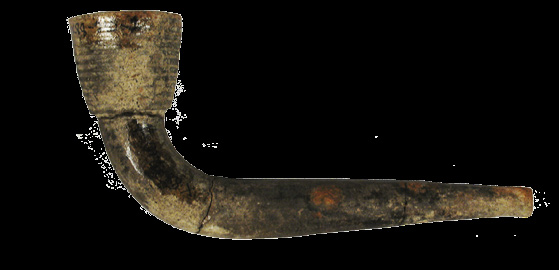
An entirely new strategic plan for 2020-2022, titled “Laying a New Foundation” and declared to be “grounded in equity, anti-racism and anti-oppression,” was released in August and will be explored in a future F&D.
While the silence of the previous plan may reflect the historical absence of First Nations from the building of the city – the Wendat left the area more than 400 years ago, the Seneca were here only briefly, and the Mississauga reserve was 20 km west of the harbour – it failed to account for the previous 11,000 years of the area’s history.
This vast period is, though, cogently outlined on the City’s own website, where “The History of Toronto: An 11,000 Year Journey,” written by Carl Benn, has been up since 2006. It is also fully explored in a growing number of books on the city, notably Toronto: An illustrated history of its first 12,000 years (Lorimer 2008), edited by Ron Williamson, a leading Toronto archaeologist. While both men are life-long scholars of the histories of First Nations in Ontario, neither is Indigenous – and that’s a factor in the newly politicized atmosphere of Toronto’s history.
Despite the failures of the 2016-2021 Road Map, the designers of the permanent displays at the Fort York Visitor Centre, completed in 2016 and led by then Chief Curator Wayne Reeves, fully involved the Mississaugas (although Rochette failed to recognize this). The result was that nearly 20% of the main floorspace is devoted to their story – including their experience with land claims and residential schools – and, importantly, in their own words.
The challenge raised by Rochette is to extend this kind of involvement to the spiritual care and better management of the Indigenous portion of the City’s collection. Only months later, the professionals at Museums & Heritage Services are responding with energy and sincerity.
Original printed pages