Every spring, rhubarb and sorrel (close relatives, botanically speaking) are the first treasures harvested from our heritage kitchen garden. All of the food grown in these gardens is used for demonstrations and testing in the fort’s own historic kitchens.
Rhubarb, originally from Asia, was first known in Europe in the 16th century (or even earlier) as a medicinal plant. It’s not clear why it didn’t begin showing up as an ingredient in cookery books – it is, after all, a pleasure as well – until a few centuries later.
One of the earlier English recipes, and one of our favourites, is Rhubarb Tart from Mrs. Maria Rundell’s A New System of Domestic Cookery, 1806. We don’t know when cooks began adding strawberries to their rhubarb pies, but it was enjoyed for many years in Canadian households on its own – so much so that it was nicknamed “the pie plant.” (Codlin was an English term for hard apples that were only edible when cooked.)
A more recent addition to our rhubarb repertoire is Mary Eaton’s pink Rhubarb Sherbert from The Cook and Housekeeper’s Complete and Universal Dictionary, 1823. Sherbert was then a cooled, non-alcoholic drink made with fruit juice, popular among the demure at garden parties.
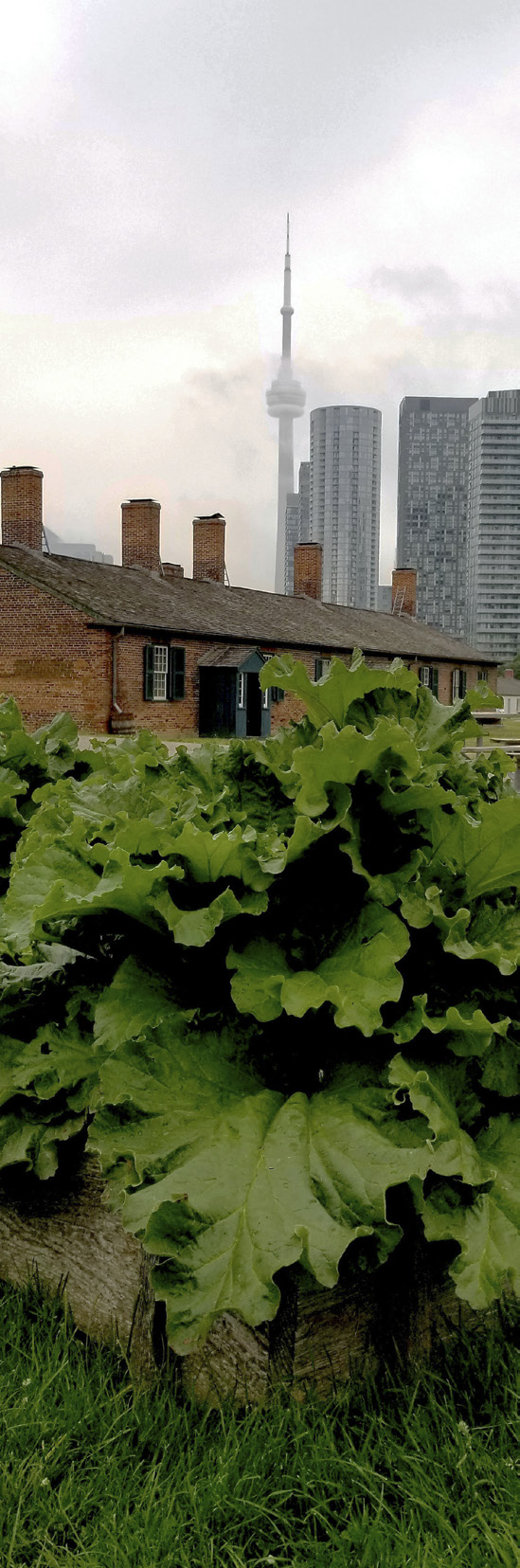
It’s also a popular feature of the spring session of Kinder-Gardeners, one of our new educational programs. The little ones learn about the science of kitchen gardens and get to harvest a few of the plants. Even more fun is sampling the historic recipes, especially the tarts! An important aspect of the program is teaching the kinder-gardeners which part of the plant is edible, and which part is not (the oxalic acid in rhubarb leaves, for example, makes them toxic).
Our rhubarb is grown from heritage seed. But was rhubarb actually cultivated in the officers’ kitchen garden during Georgian times? We know, first, that “tart rhubarb” is listed for sale in William Custead’s remarkable seed catalogue. This valuable resource – a list of plants available in York – was printed by none other than the firebrand William Lyon Mackenzie, rebel and first mayor of Toronto, and given the beautifully long-winded name Catalogue of fruit & ornamental trees, flowering shrubs, garden seeds and green-house plants, bulbous roots & flower seeds, cultivated and for sale at the Toronto Nursery, Dundas Street, near York, 1827.
We also know that popular writers like Mrs. Traill recommended rhubarb as a welcome early addition to the spring table (and sweetened hers with abundant maple syrup). It thrives under the right conditions in many gardens within a day’s march of Fort York, and it certainly thrives in ours. Plus, it’s delicious.
Visitors to the historic kitchen are delightfully surprised each spring when we serve these compelling historic recipes. Our goal is to reintroduce old favourites like rhubarb to modern tables and palates. Try these recipes for yourself, and don’t be surprised when rhubarb begins making ever more frequent appearances among your early summer desserts.

Original printed pages