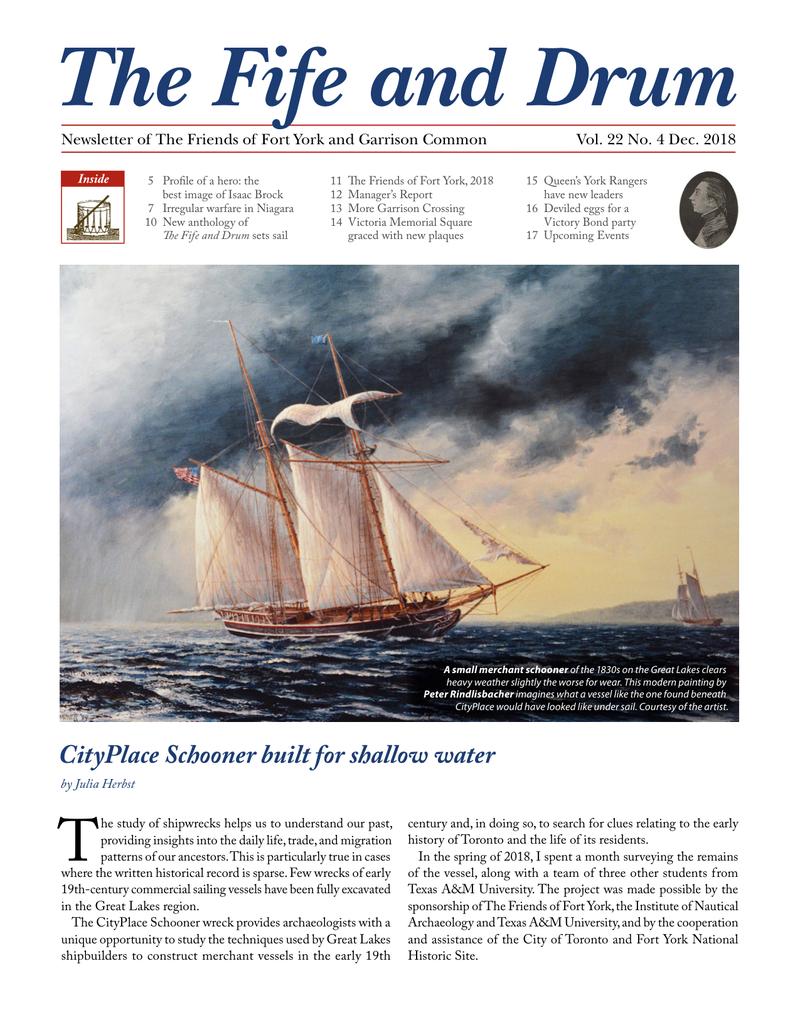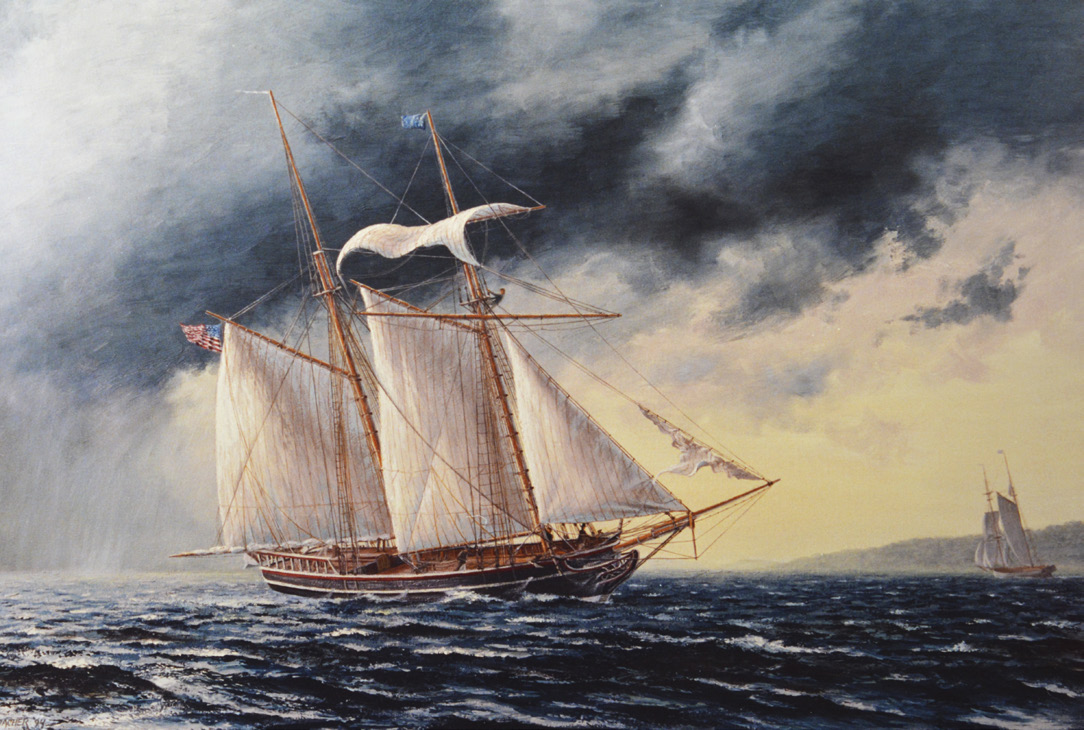
The study of shipwrecks helps us to understand our past, providing insights into the daily life, trade, and migration patterns of our ancestors. This is particularly true in cases where the written historical record is sparse. Few wrecks of early 19th-century commercial sailing vessels have been fully excavated in the Great Lakes region.
The CityPlace Schooner wreck provides archaeologists with a unique opportunity to study the techniques used by Great Lakes shipbuilders to construct merchant vessels in the early 19th century and, in doing so, to search for clues relating to the early history of Toronto and the life of its residents.
In the spring of 2018, I spent a month surveying the remains of the vessel, along with a team of three other students from Texas A&M University. The project was made possible by the sponsorship of The Friends of Fort York, the Institute of Nautical Archaeology and Texas A&M University, and by the cooperation and assistance of the City of Toronto and Fort York National Historic Site.

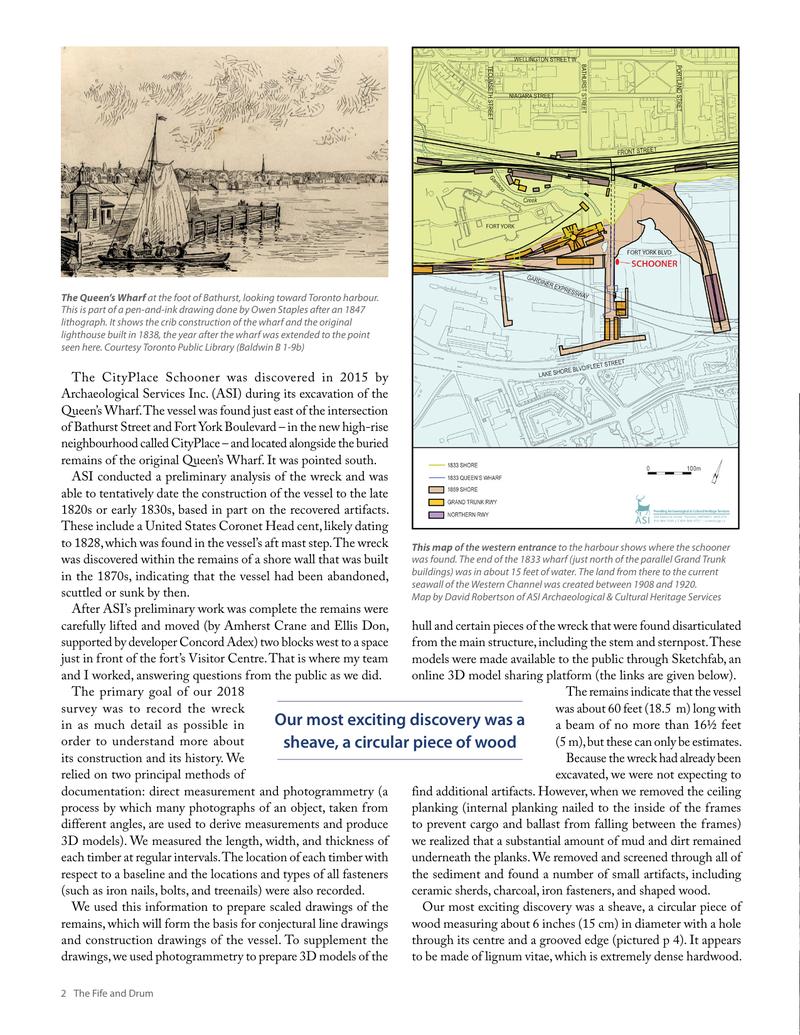
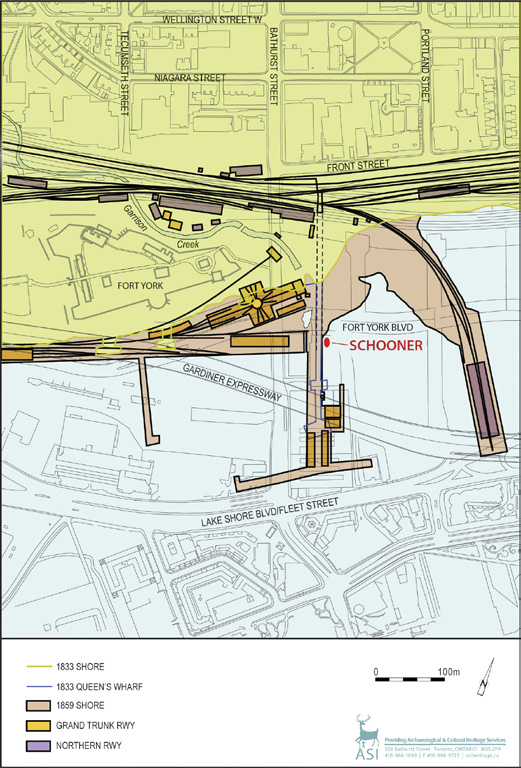
The CityPlace Schooner was discovered in 2015 by Archaeological Services Inc. (ASI) during its excavation of the Queen’s Wharf. The vessel was found just east of the intersection of Bathurst Street and Fort York Boulevard – in the new high-rise neighbourhood called CityPlace – and located alongside the buried remains of the original Queen’s Wharf. It was pointed south.
ASI conducted a preliminary analysis of the wreck and was able to tentatively date the construction of the vessel to the late 1820s or early 1830s, based in part on the recovered artifacts. These include a United States Coronet Head cent, likely dating to 1828, which was found in the vessel’s aft mast step. The wreck was discovered within the remains of a shore wall that was built in the 1870s, indicating that the vessel had been abandoned, scuttled or sunk by then.
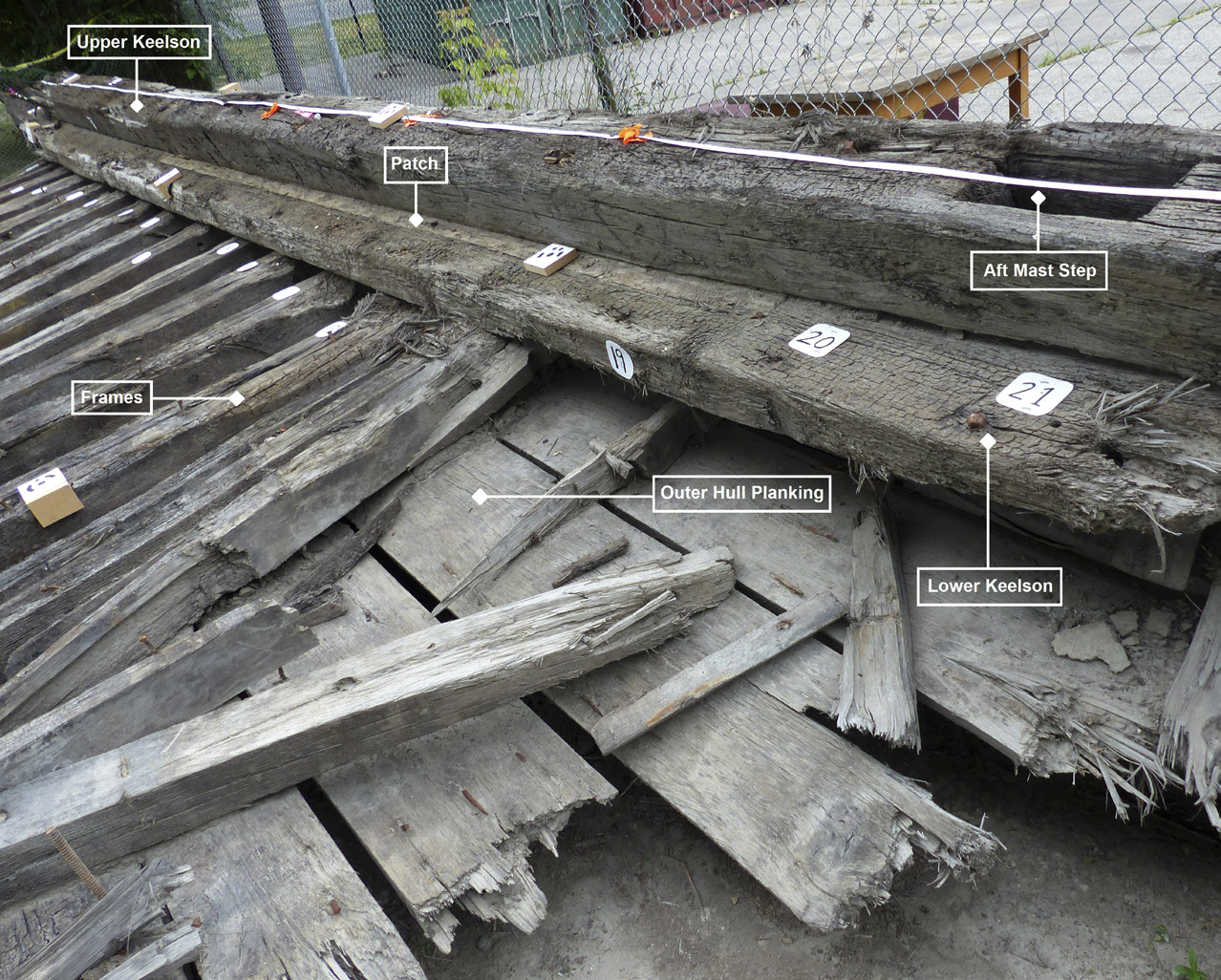
After ASI’s preliminary work was complete the remains were carefully lifted and moved (by Amherst Crane and Ellis Don, supported by developer Concord Adex) two blocks west to a space just in front of the fort’s Visitor Centre. That is where my team and I worked, answering questions from the public as we did.
The primary goal of our 2018 survey was to record the wreck in as much detail as possible in order to understand more about its construction and its history. We relied on two principal methods of documentation: direct measurement and photogrammetry (a process by which many photographs of an object, taken from different angles, are used to derive measurements and produce 3D models). We measured the length, width, and thickness of each timber at regular intervals. The location of each timber with respect to a baseline and the locations and types of all fasteners (such as iron nails, bolts, and treenails) were also recorded.
We used this information to prepare scaled drawings of the remains, which will form the basis for conjectural line drawings and construction drawings of the vessel. To supplement the drawings, we used photogrammetry to prepare 3D models of the hull and certain pieces of the wreck that were found disarticulated from the main structure, including the stem and sternpost. These models were made available to the public through Sketchfab, an online 3D model sharing platform (the links are given below).
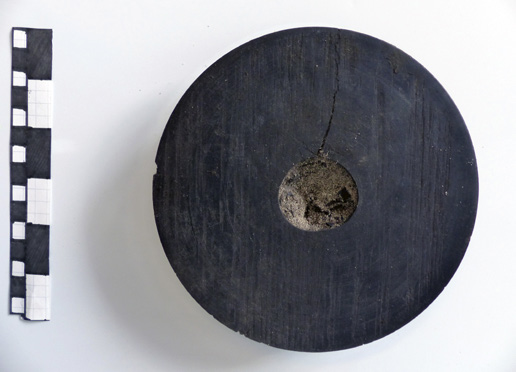
Our most exciting discovery was a sheave, a circular piece of wood
The remains indicate that the vessel was about 60 feet (18.5 m) long with a beam of no more than 16½ feet (5 m), but these can only be estimates.
Because the wreck had already been excavated, we were not expecting to find additional artifacts. However, when we removed the ceiling planking (internal planking nailed to the inside of the frames to prevent cargo and ballast from falling between the frames) we realized that a substantial amount of mud and dirt remained underneath the planks. We removed and screened through all of the sediment and found a number of small artifacts, including ceramic sherds, charcoal, iron fasteners, and shaped wood.
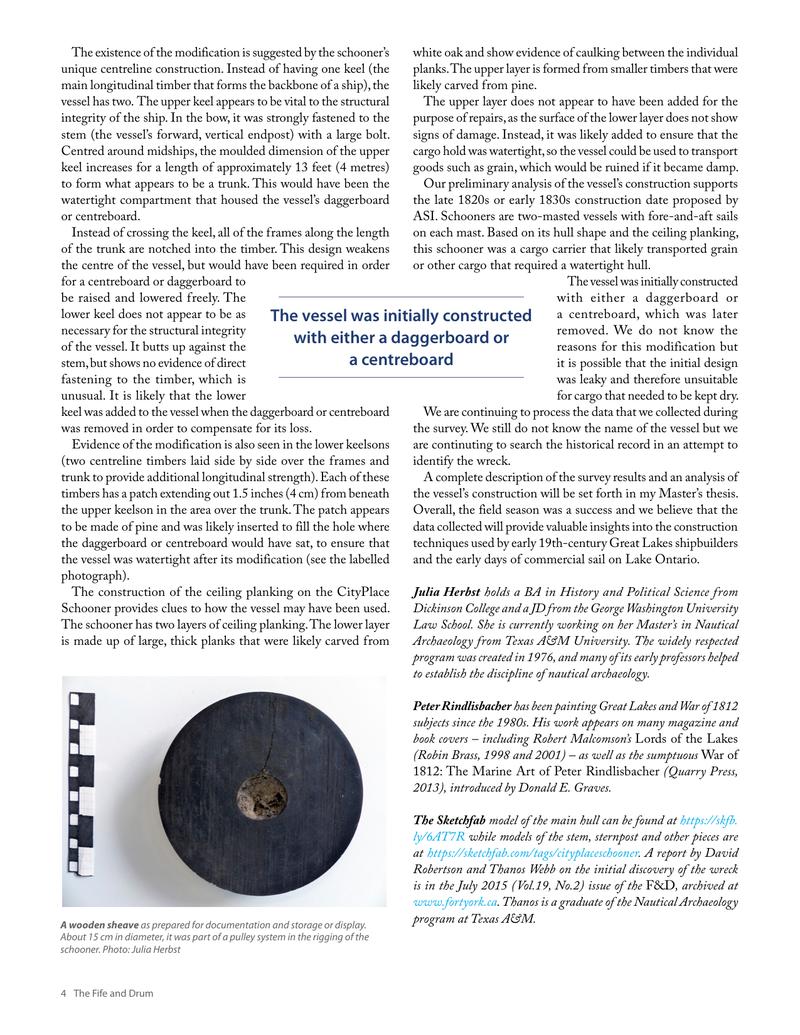
Our most exciting discovery was a sheave, a circular piece of wood measuring about 6 inches (15 cm) in diameter with a hole through its centre and a grooved edge (pictured p 4). It appears to be made of lignum vitae, which is extremely dense hardwood.
The sheave would have been a component of one of the pulley systems in the ship’s rigging. A smaller sheave with a British Ordnance broad arrow carved into its face was found during the 2015 excavation. The newly discovered sheave, however, did not have any carvings on its surface. All of the recovered artifacts were recorded, photographed, and turned over to the City of Toronto.
Our analysis of the remains suggests that the vessel was built with either a daggerboard or a centreboard and then modified to remove the same. Both are forms of retractable keels. Daggerboards are raised and lowered vertically, while centreboards pivot around a bolt at their forward end. These designs were popular on the Great Lakes in the early 19th century because most of the harbours were still shallow and unimproved. Daggerboards and centreboards allowed sailors to enter these harbours without damaging their vessels while still providing the necessary lateral resistance to effectively sail while out on the lakes.
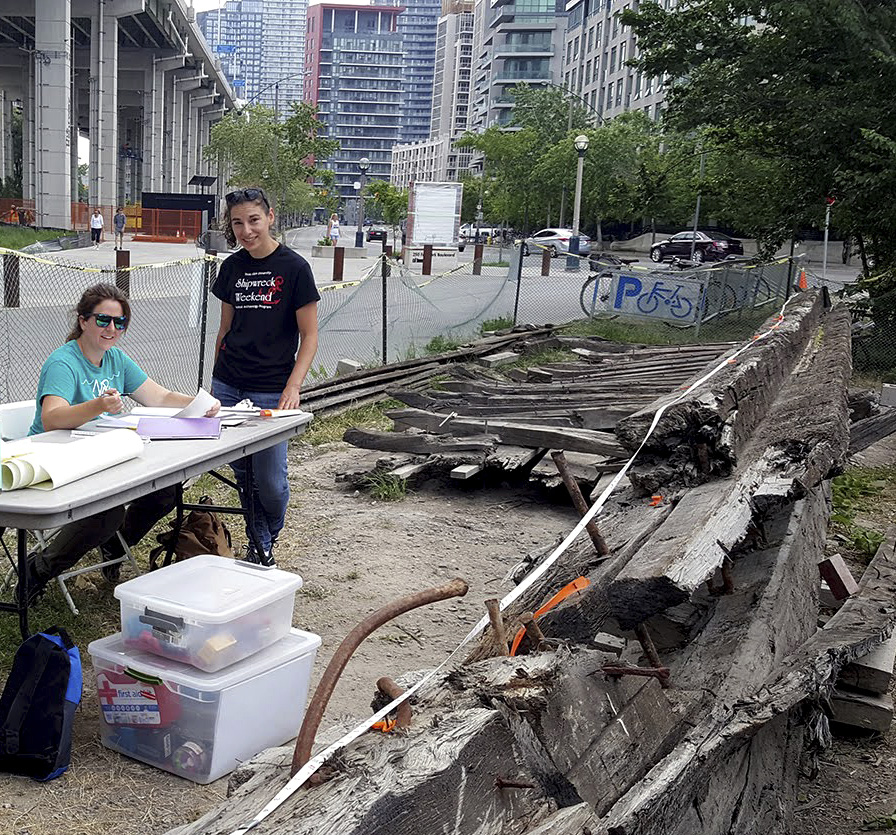
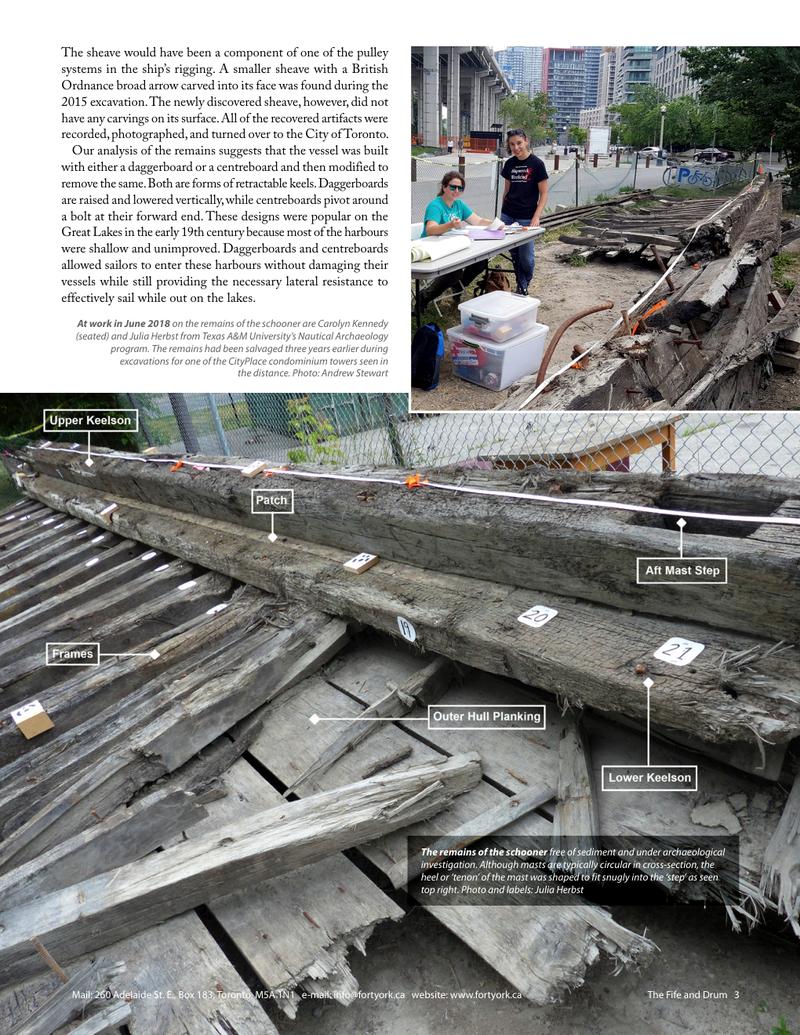
The existence of the modification is suggested by the schooner’s unique centreline construction. Located a few feet aft of the main longitudinal timber that forms the backbone of a ship), the vessel has two. The upper keel appears to be part of the structural integrity of the ship. In the bow, it was strongly fastened to the stem (the vessel’s forward, vertical endpost) with a large bolt. Centred around midships, the moulded dimension of the upper keel increases for a length of approximately 13 feet (4 metres) to form what appears to be a trunk. This would have been the watertight compartment that housed the vessel’s daggerboard or centreboard.
Instead of crossing the keel, all of the frames along the length of the trunk are notched into the timber. This design weakens the centre of the vessel, but would have been required in order for a centreboard or daggerboard to be raised and lowered freely. The lower keel does not appear to be as necessary for the structural integrity of the vessel. It butts up against the stem, but shows no evidence of direct fastening to the timber, which is unusual. It is likely that the lower keel was part of the vessel when the daggerboard or centreboard was removed in order to compensate for its loss.
The vessel was initially constructed with either a daggerboard or a centreboard
Evidence of the modification is also seen in the lower keelsons (two centreline timbers laid side by side atop the frames of a trunk to provide additional longitudinal strength). Each of these timbers has a patch extending out 15 inches (4 cm) from beneath the upper keelson in the area over the trunk. The patch appears to be made of pine and was likely inserted to fill the hole where the daggerboard or centreboard would have sat, to ensure that the vessel was watertight after its modification (see the labelled photograph).
The construction of the ceiling planking on the CityPlace Schooner provides clues to how the vessel may have been used. The schooner has two layers of ceiling planking. The lower layer is made up of large, thick planks that were likely carved from white oak and show evidence of caulking between the individual planks. The upper layer is formed from smaller timbers that were likely carved from pine.
The upper layer does not appear to have been added for the purpose of repairs, as the surface of the lower layer does not show signs of damage. Instead, it was likely added to ensure that the cargo hold was watertight, so the vessel could be used to transport goods such as grain, which would be ruined if it became damp.
Our preliminary analysis of the vessel’s construction supports the late 1820s or early 1830s construction date proposed by ASI. Evidence for the two-masted vessels with fore-and-aft sails on each mast. Based on its hull shape and the ceiling planking, this schooner was a cargo carrier that likely transported grain or other cargo that required a watertight hull.
The vessel was initially constructed with either a daggerboard or a centreboard, which was later removed. We do not know the reasons for this modification but it is possible that the initial design was leaky and therefore unsuitable for cargo that needed to be kept dry.
We are continuing to process the data that we collected during the survey. We still do not know the name of the vessel but we are continuing to search the historical record in an attempt to identify the wreck.
A complete description of the survey results and an analysis of the vessel’s construction will be set forth in my Master’s thesis. Overall, the field season was a success and we believe that the data collected will provide valuable insights into the construction techniques used by early 19th-century Great Lakes shipbuilders and the early days of commercial sail on Lake Ontario.
Sources & Further Reading
The Sketchfab model of the main hull can be found at https://skfb.ly/6dYTR while models of the stem, sternpost and other pieces are at https://sketchfab.com/tags/cityplaceschooner. A report by David Robertson and Thomas Webb on the initial discovery of the wreck is in the July 2015 (Vol 19, No.2) issue of the F&D, archived at www.fortyork.ca. Thomas is a graduate of the Nautical Archaeology program at Texas A&M.
Original printed pages