Commemorating history has no purpose for dead people. They don’t care anymore. It is not intended for the sake of folks who lived heroic or ordinary lives in times past—they are long gone.
It is about us, today, and our kids, tomorrow.
We look at the road travelled because it helps us understand where we are going. Because it gives our journey a sense of purpose and direction. Because it grounds us. It is in the context of understanding our time and place that our individual journeys gain perspective. Or so we like to think. So…does it really matter that a battle was fought 200 years ago on this spot, to our lives today?
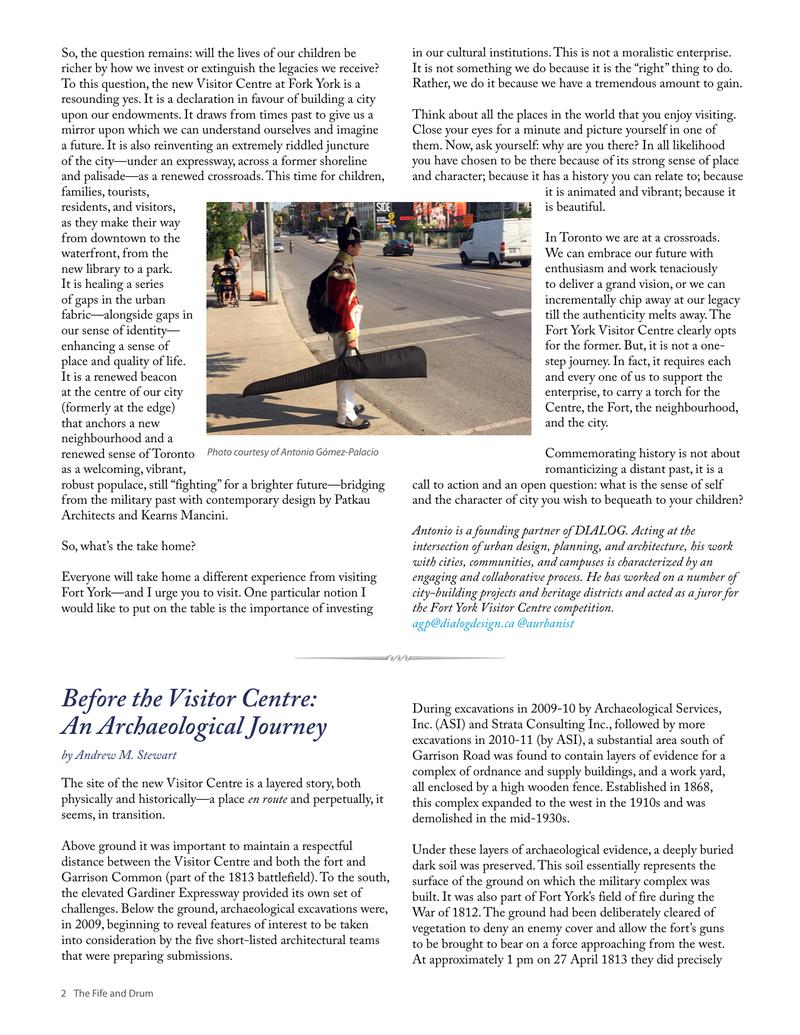
To get an answer, I talk to my kids. My 11 year-old spent the night at Fort York as part of a reading club outing. My 9 year-old was recently able to dress up as a soldier and parade around the fort in a red coat. They tell me: “we would have been part of the USA”… “sometimes, kids my age had to fight”… “the food was terrible.” It becomes clear to me that my children have gained perspective of their national identity, their privileged childhood, and a slightly-greater appreciation for my home cooking, among other things. As they talk about their impressions of the fort, I can see them mirror an understanding of themselves.
Now, it is my turn to stand on the grounds of the fort and reflect on how times have changed. Open spaces have transitioned from battlefields to port lands to parklands. A sense of expanse and seclusion has been replaced by the clamour of urban vibrancy. A defensive ethos has been replaced by a welcoming and celebratory vocation. Even the shoreline has receded and been infilled with expressways, condos, and one striking library. And, somewhere in the midst of all of this is a story that perseveres and continues to be written.
It is clear to me that conserving the 41-acre grounds of Fort York is about much more than keeping a memory alive. It is about accepting the legacy we inherit, for building a city and defining ourselves. It is the inheritance of our generation. How we choose to leverage it or squander it is up to us. What we manage to pass on to our children is also up to us.
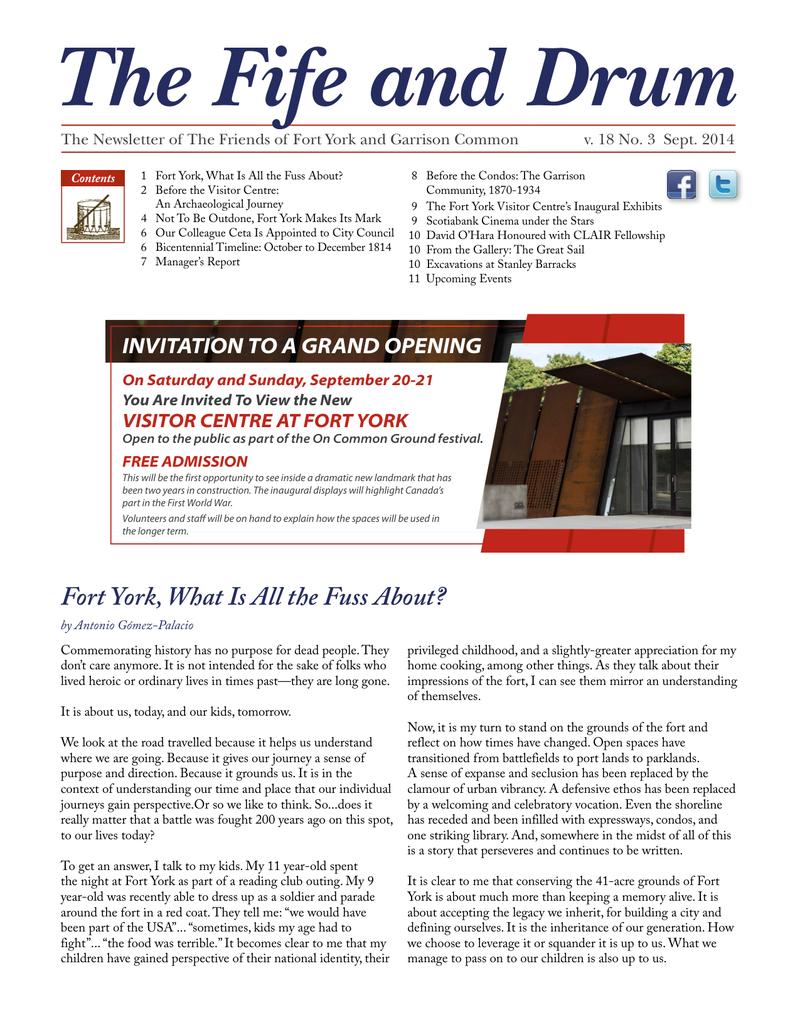
So, the question remains: will the lives of our children be richer by how we invest or extinguish the legacies we receive? To this question, the new Visitor Centre at Fort York is a resounding yes. It is a declaration in favour of building a city upon our endowments. It draws from times past to give us a mirror upon which we can understand ourselves and imagine a future. It is also reinventing an extremely riddled juncture of the city—under an expressway, across a former shoreline and palisade—as a renewed crossroads. This time for children, families, tourists, residents, and visitors, as they make their way from downtown to the waterfront, from the new library to a park. It is healing a series of gaps in the urban fabric—alongside gaps in our sense of identity—enhancing a sense of place and quality of life. It is a renewed beacon at the centre of our city (formerly at the edge) that anchors a new neighbourhood and a renewed sense of Toronto as a welcoming, vibrant, robust populace, still “fighting” for a brighter future—bridging from the military past with contemporary design by Patkau Architects and Kearns Mancini.

So, what’s the take home?
Everyone will take home a different experience from visiting Fort York—and I urge you to visit. One particular notion I would like to put on the table is the importance of investing in our cultural institutions. This is not a moralistic enterprise. It is not something we do because it is the “right” thing to do. Rather, we do it because we have a tremendous amount to gain.
Think about all the places in the world that you enjoy visiting. Close your eyes for a minute and picture yourself in one of them. Now, ask yourself: why are you there? In all likelihood you have chosen to be there because of its strong sense of place and character; because it has a history you can relate to; because it is animated and vibrant; because it is beautiful.
In Toronto we are at a crossroads. We can embrace our future with enthusiasm and work tenaciously to deliver a grand vision, or we can incrementally chip away at our legacy till the authenticity melts away. The Fort York Visitor Centre clearly opts for the former. But, it is not a one-step journey. In fact, it requires each and every one of us to support the enterprise, to carry a torch for the Centre, the Fort, the neighbourhood, and the city.
Commemorating history is not about romanticizing a distant past, it is a call to action and an open question: what is the sense of self and the character of city you wish to bequeath to your children?
Before the Visitor Centre: An Archaeological Journey
by Andrew M. Stewart
The site of the new Visitor Centre is a layered story, both physically and historically—a place en route and perpetually, it seems, in transition.
Above ground it was important to maintain a respectful distance between the Visitor Centre and both the fort and Garrison Common (part of the 1813 battlefield). To the south, the elevated Gardiner Expressway provided its own set of challenges. Below the ground, archaeological excavations were, in 2009, beginning to reveal features of interest to be taken into consideration by the five short-listed architectural teams that were preparing submissions.
During excavations in 2009-10 by Archaeological Services, Inc. (ASI) and Strata Consulting Inc., followed by more excavations in 2010-11 (by ASI), a substantial area south of Garrison Road was found to contain layers of evidence for a complex of ordnance and supply buildings, and a work yard, all enclosed by a high wooden fence. Established in 1868, this complex expanded to the west in the 1910s and was demolished in the mid-1930s.
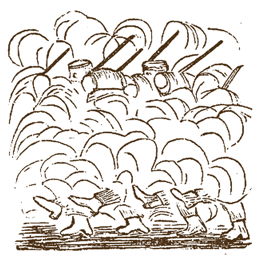
Under these layers of archaeological evidence, a deeply buried dark soil was preserved. This soil essentially represents the surface of the ground on which the military complex was built. It was also part of Fort York’s field of fire during the War of 1812. The ground had been deliberately cleared of vegetation to deny an enemy cover and allow the fort’s guns to be brought to bear on a force approaching from the west. At approximately 1 pm on 27 April 1813 they did precisely

Fort York’s Visitor Centre was not intended primarily as a landmark, but may become one thanks to its dramatic location in counterpoint to the fort’s nemesis, the Expressway. The centre turns that soaring structure at its highest point as it crosses Toronto’s waterfront into an arcade over the building’s main entrance and a cover for nearby parking. What takes the centre’s design by Patkau Architects and Kearns Mancini into the realm of genius, however, are large rusting steel panels on the street elevation to recall the low bluff along Lake Ontario originally in that place. The north or rear facade is equally masterful. A rising ramp emerges from the structure’s lower core to place visitors a short walk across the Garrison Common from the fort’s west gate—This side facing the battlefield where American and British casualties may still lie buried where they fell is repaired in sheathed in ghostly-pale glass.
Efforts begun in the 1980s have now resulted in a wonderful structure which has cost $21 million to date, giving Fort York a focus it never had before. As well, it provides the neighbours with a peerless place to meet, if only perhaps to look out over the Common from the roof terrace and watch the sun set.
Congratulations are deserved all ’round.
Stephen Otto is a founder of The Friends of Fort York and the current co-chair of its board of directors.

magical today is the orientation film: as the closing scenes appear, the screen rises and viewers are invited to walk directly out into History.
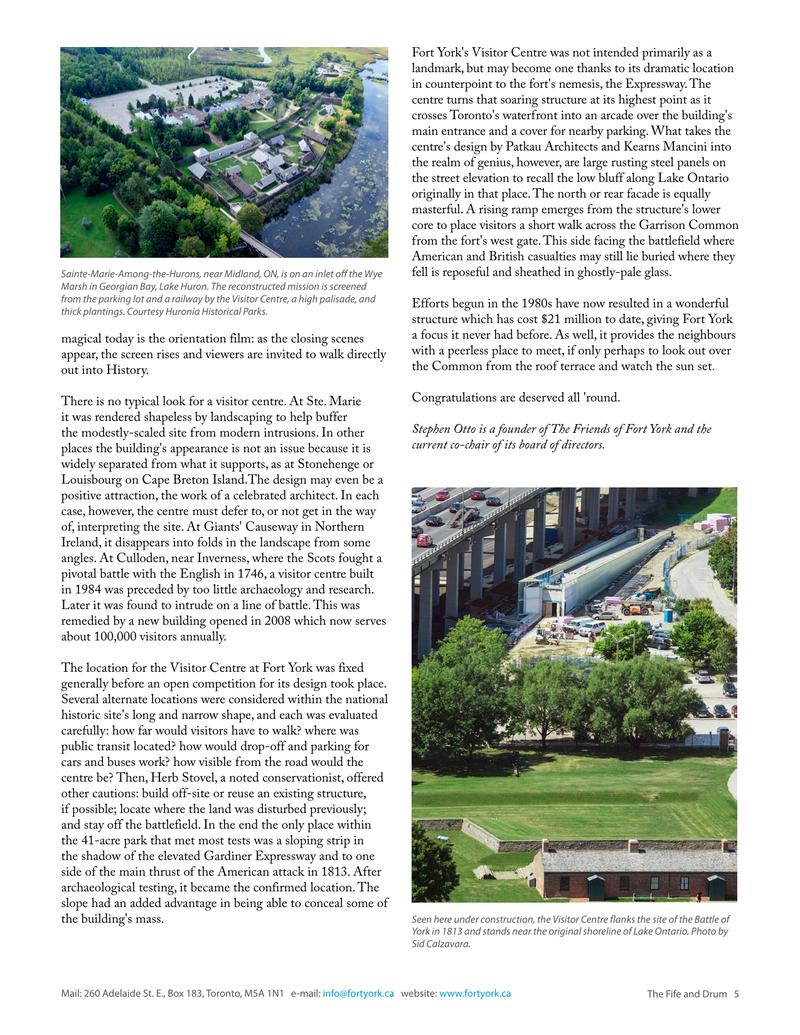
There is no typical look for a visitor centre. At Ste. Marie it was rendered shapeless by landscaping to help buffer the modestly-scaled site from modern intrusions. In other places the building’s appearance is not an issue because it is widely separated from what it supports, as at Stonehenge or Louisbourg on Cape Breton Island. The design may even be a positive attraction, the work of a celebrated architect. In each case, however, the centre must defer to, or not get in the way of, interpreting the site. At Giants’ Causeway in Northern Ireland, it disappears into folds in the landscape from some angles. At Culloden, near Inverness, where the Scots fought a pivotal battle with the English in 1746, a visitor centre built in 1984 was preceded by too little archaeology and research. Later it was found to intrude on a line of battle. This was remedied by a new building opened in 2008 which now serves about 100,000 visitors annually.
The location for the Visitor Centre at Fort York was fixed generally before an open competition for its design took place. Several alternate locations were considered within the national historic site’s long and narrow shape, and each was evaluated carefully: how far would visitors have to walk? where was public transit located? how would drop-off and parking for cars and buses work? how visible from the road would the centre be? Then, Herb Stovel, a noted conservationist, offered other cautions: build off-site or reuse an existing structure, if possible; locate where the land was disturbed previously; and stay off the battlefield. In the end the only place within the 41-acre park that met most tests was a sloping strip in the shadow of the elevated Gardiner Expressway and to one side of the main thrust of the American attack in 1813. After archaeological testing, it became the confirmed location. The slope had an added advantage in being able to conceal some of the building’s mass.
Original printed pages