A chronology of the construction of Fort York is one of the largely unexplored aspects of the site’s history. It is a complex and interesting story, the progress of which is not helped by a curious lack of surviving documentation; not one of the various engineers’ estimates, for example, has ever been found in the Canadian archives. A researcher must cobble together clues and references from alternative sources.
At the opening of hostilities with the United States, the present site of the fort on the west side of Garrison Creek was occupied by the Government House and its complex of associated public buildings. The genesis of this grouping lay in the earlier proposal to remove the Marine Establishment from Kingston to York. To this end, Major General Isaac Brock recommended that the Government House site be established as a ‘Citadel’ and military post, and fortified against a westward attack. Work began in April 1812, with the preparation of a temporary magazine, the excavation of a ditch (forming the present west curtain wall) and a demi-lune battery (the present Circular Battery), mounting two 12-pounder cannon, on the embankment at the southeast corner of the Government House. With the exception of the magazine, these features—plus the garrison well—are all that remain today of the works that were in place during the American attack of 27 April 1813.
Following the destruction of the Government House and the town and garrison blockhouses by departing US troops, the accommodation for British troops at York was substantially diminished. Moreover, when the enemy returned on 31 July 1813, they burned all but six of the remaining barracks at the garrison, making the post all but untenable for the British army when it was proposed to send troops back to reoccupy the capital. Lt. Colonel Ralph Henry Bruyeres, the Commanding Royal Engineer, came from Quebec in late August under orders to erect blockhouses for the accommodation of troops and stores. He set about directing the cleanup of the site for that purpose. The immediate priority was to construct a variety of temporary (i.e. wooden) buildings as quickly as possible.
Shipbuilding timbers left unburnt at the dockyard were hauled to the new garrison site for the construction of Blockhouses Number One and Two. The debris of the Government House complex was scoured away and dumped over the embankment; any materials that could be reused (primarily building stone) were salvaged. The burnt-out shells of the Parliament buildings in town were converted into barracks, and by the end of November 1813, Blockhouses One and Two had been raised and were ready to be roofed in, but the work was delayed into the New Year owing to poor weather and the chronic want of artificers.
The year 1814 was a busy one. By March, the two blockhouses we know today had been finished, as also was the new Western Battery, which had been mounted with guns. More ordnance was arriving daily to replace that taken by the enemy. The batteries in the garrison, however, remained unarmed. An Ordnance Store was building at the garrison, a blockhouse was under construction in the ravine at Lot (later Queen) Street, and another to replace the two lost on Gibraltar Point. Elmsley House had been converted to a hospital, and the stable into barracks. By the end of May, the blockhouse on Gibraltar Point had been completed, with a glacis. By July, the blockhouse in the ravine had also been completed with a glacis, and the garrison entirely enclosed with pickets. In August, the estimate for the range of splinterproof barracks (along the south wall) was submitted, and in September, those for the construction of the Garrison Hospital in the ravine (north of the Fort) and the woodframe Officers’ (‘Blue’) Barracks were approved. By December, construction had begun on the Brick Magazine. Materials for such ‘Engineer Services’ were delivered by ship, landed on the beach, and hauled up by contractors’ teams of oxen into the garrison.
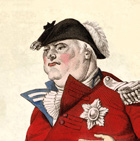
By 6 January 1815, twenty-year-old 1st Lieutenant William Matthew Gossett, RE had arrived from Kingston to take charge of the department at York. He was a veteran of the attack on Oswego, New York (5-6 May 1814), and would be responsible for the construction of the majority of the
‘permanent’ buildings in the new garrison, all but two of which survive to this day. A search of the Commissariat Account Book shows that over the course of five days in March 1815, his estimates for the South and North Soldiers’ Barracks, Stone Magazine, Fort Adjutant’s Office and Quarters (1815-1838), Officers’ Brick Barracks and Mess Room, and the Commandant’s Quarters (burned in 1869) were approved. Gossett superintended the principal construction of these buildings (see “The Thomsons: Early Builders at Fort York,” Fife and Drum July 2010). Unfortunately, he was removed to Kingston in September and, so, likely never saw them to completion.
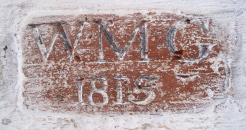
Intriguingly, however, in July 1815, he’d literally left his mark on one of these buildings—the Stone Magazine—the work of which he was apparently the most proud. Gossett was succeeded by 1st Lieutenant Henry Hill Willson, RE who remained in command of the department at York until the arrival of 1st Lieutenant George Phillpotts and his young family in June 1816, when all the buildings surviving today had been reconstructed
Original printed pages