The War of 1812 is an event highly regarded by Canadians, barely acknowledged by Americans, forgotten by the British, and haunting to Native people. There is often debate about who won the war, but what about those who lost? The war brought unity, helping to mould the future Canada; it marked an end to the ongoing dispute between Britain and the United States and strengthened the American position in relations with Britain. However, the Natives continue to suffer and, in a sense, still await the end of the war.
A conflict in British North America between Britain and the United States, the war occurred as a result of British impressments of American sailors within a larger European conflict. Natives hoped to remain neutral but as Ryerson University historian Carl Benn explains in his book, The Iroquois in the War of 1812, “the unfolding events, changing perceptions of their interests, powerful cultural pressures, divisions within their communities, and the broad personal freedoms enjoyed by individuals all combined to make it very difficult for the Iroquois to remain at peace.” Increased pressure from the Americans moving westward forced some Natives to choose sides.
Donald Fixico, a professor of history at Arizona State University, explains that the Natives knew that the “British and American linear minds moved from claiming the land, to colonization and exploitation of natural resources.” It is thought that this knowledge guided them in their decisions, where the majority sided with the British over the Americans. Those that took the side of the United States, in the words of Benn, “reflected their desire to maintain possession of their reservations without having to purchase American benevolence by fighting for the United States against the interests of other aboriginal peoples.” Alternatively, the majority that sided with the British hoped that a victory would curb American expansion, thus preserving their lands.
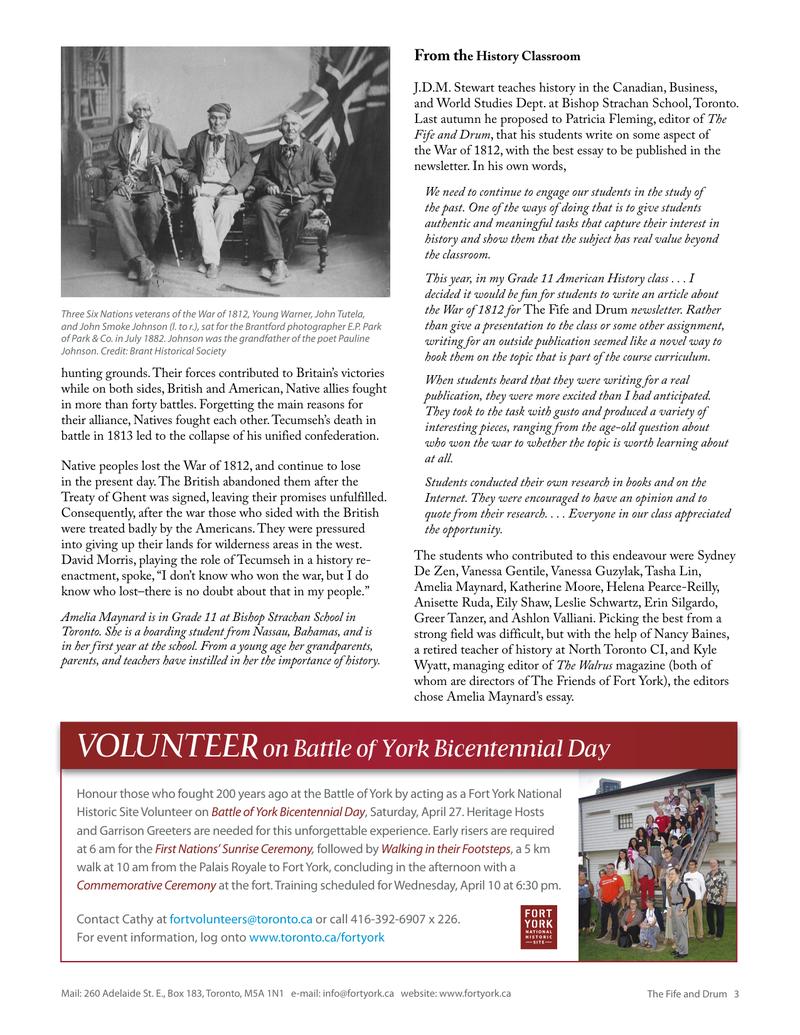
Tecumseh, the Shawnee chief, was a notable leader known for forging an alliance with the British who promised to return the Natives’ old boundaries, and to restore and preserve their hunting grounds. Their forces contributed to Britain’s victories while on both sides, British and American, Native allies fought in more than forty battles. Forgetting the main reasons for their alliance, Natives fought each other. Tecumseh’s death in battle in 1813 led to the collapse of his unified confederation.
Native peoples lost the War of 1812, and continue to lose in the present day. The British abandoned them after the Treaty of Ghent was signed, leaving their promises unfulfilled. Consequently, after the war those who sided with the British were treated badly by the Americans. They were pressured into giving up their lands for wilderness areas in the west. David Morris, playing the role of Tecumseh in a history re-enactment, spoke, “I don’t know who won the war, but I do know who lost–there is no doubt about that in my people.”
Original printed pages